Anilox Roll Cleaning: 3 Methods to Improve Print Quality and Reduce Downtime
Keeping anilox rolls clean is essential for consistent ink transfer and print quality. This guide explores three types of anilox cleaning, from routine cleaning after a print job to removing dried ink on press and choosing the right offline deep-cleaning method. We’ll also cover how Enpurex can help simplify on-press cleaning.
Why Does Anilox Roll Cleaning Matter?
Over time, dried ink and coating residue can build up inside the engraved cells of an anilox roll, reducing their ability to carry and release ink. The result? Weak colors, uneven solids, and inconsistent print quality.
The challenge is that a dirty anilox roll isn’t always obvious. On press, it may look like a color that won’t reach its target, leading operators to adjust ink density or run additional impressions before checking the roll.
Regular cleaning helps prevent these issues, reduce unnecessary troubleshooting, and maintain consistent print results. The key is removing ink and coating residue before it has a chance to dry and harden.
What Are the Three Types of Anilox Roll Cleaning?
Not all anilox cleaning methods serve the same purpose. Some are designed to remove wet ink after a job, while others tackle dried residue or buildup deep inside the engraved cells.
Understanding when to use each method can help maintain print quality and minimize downtime.
| Cleaning Method | When to Use It | What It Removes | How It Works |
|---|---|---|---|
| Routine flushing | After every print job | Wet ink and fresh residue | A compatible cleaning solution is flushed through the ink system. |
| On-press cleaning | When dried ink builds up or print quality declines | Dried ink and coating residue | A specialized cleaner, such as Enpurex, is applied while the roll remains on press. |
| Offline deep cleaning | When routine and on-press cleaning are no longer effective | Stubborn buildup deep within the cells | Chemical, ultrasonic, soda blasting, or laser cleaning methods are used. |
For manual cleaning, always follow the anilox manufacturer’s recommendations for brushes and cleaning tools. Stainless steel brushes may be approved for certain ceramic rolls, while softer brass brushes may be appropriate for some chrome surfaces.
1. Routine Cleaning: Flush Your Anilox Roll After Every Job
Clean your anilox roll at the end of every job, while the ink is still wet. Use a cleaning solution compatible with your ink type (water-based, UV, or solvent), flush the ink system, and wipe the roll with a lint-free cloth following the manufacturer’s instructions.
Removing ink before it dries helps prevent buildup inside the engraved cells.
Routine flushing is one of the simplest and most cost-effective ways to maintain anilox performance. Skipping this step allows ink to dry and harden, making it more difficult to remove and potentially requiring additional on-press cleaning or a more intensive deep-cleaning process.
The takeaway: A few minutes of routine cleaning can help prevent more time-consuming cleaning later.
2. On-Press Cleaning: How to Remove Dried Ink from Anilox Rolls
Even with regular flushing, dried ink and coating residue can accumulate inside anilox cells. When this happens, a more targeted cleaning method may be needed to restore consistent ink transfer.
On-press cleaning allows operators to remove stubborn residue without taking the anilox roll off the press, helping reduce downtime and unnecessary roll handling.
Enpurex Anilox Cleaner is designed to help remove dried ink and buildup directly on press. It is particularly useful for water-based and UV inks, where dried or cured residue can be difficult to remove through routine flushing alone.
How to Clean an Anilox Roll with Enpurex
- Remove excess ink. Wipe away any remaining wet ink. Do not pre-wet the roll with water before applying Enpurex.
- Apply the cleaner. Apply Enpurex to the roll and work it into the surface using the recommended sponge.
- Allow time to work. Let the cleaner sit for approximately 2–4 minutes, following the product instructions.
- Wipe away residue. Use a water-dampened cloth to remove the cleaner and loosened ink. Repeat as needed for stubborn buildup.
Always follow the product instructions, safety data sheet, and anilox manufacturer’s cleaning recommendations.
Try Enpurex on Your Own Anilox Rolls
Want to see how Enpurex performs on your equipment? Order it through the Flexo Concepts Marketplace and test it on your own anilox rolls.
For more information, including application instructions, a how-to video, and product details, visit our Enpurex Anilox Cleaner page.
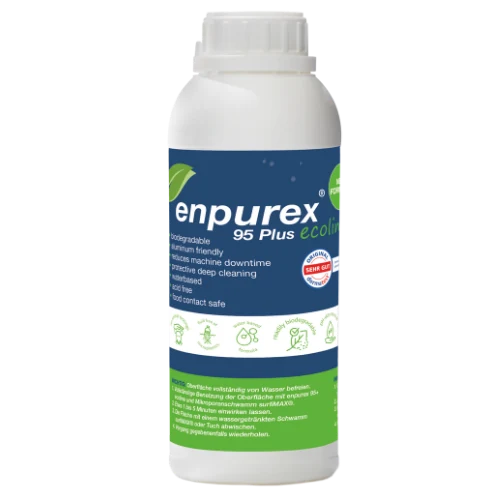
Try Enpurex on your own anilox rolls.
3. Offline Deep Cleaning: When Is It Necessary?
When routine flushing and on-press cleaning are no longer enough to restore proper ink transfer, it may be time for a deeper clean.
Offline deep cleaning removes stubborn residue that has accumulated inside the engraved cells over time. These methods typically require removing the anilox roll from the press or using specialized cleaning equipment.
There are four common approaches, each with different benefits and considerations.
| Method | How It Works | What to Consider |
|---|---|---|
| Chemical bath and rinse | The roll is soaked in a cleaning solution to loosen dried residue, followed by a controlled rinse to remove buildup from the cells. | Requires compatible chemicals, proper rinsing, and wastewater management. |
| Soda blasting | Fine sodium bicarbonate particles are directed at the roll to dislodge dried ink and residue. | Requires specialized equipment and containment to manage the cleaning media and residue. |
| Ultrasonic cleaning | Ultrasonic waves create cavitation in a cleaning solution, helping loosen and remove residue from engraved cells. | A common in-house option. Cleaning time, temperature, and frequency must be appropriate for the roll and engraving. |
| Laser cleaning | A controlled laser removes dried ink and coating deposits from the roll surface and cells. | Minimizes liquid chemical use but requires specialized equipment, safety controls, and appropriate residue extraction. |
What About Laser Anilox Cleaning?
Laser cleaning is an option for converters looking for a deep-cleaning method that doesn’t rely on chemical baths or blasting media.
Companies such as Eaglewood Technologies offer laser anilox cleaning systems and mobile cleaning services, allowing converters to access the technology without necessarily purchasing their own equipment.
While effective for suitable rolls, laser cleaning requires specialized equipment and trained operators.
How Can You Reduce the Need for Deep Cleaning?
The best approach is prevention.
Consistent flushing after every job, combined with periodic on-press cleaning, helps limit the buildup that can eventually require more intensive cleaning.
Using an on-press cleaner like Enpurex between deep cleans can help keep engraved cells clear, maintain ink transfer, and reduce unnecessary roll removal.
Frequently Asked Questions About Anilox Roll Cleaning
Can You Clean an Anilox Roll Without Removing It from the Press?
Yes. On-press cleaning products such as Enpurex allow operators to remove dried ink and residue while the roll remains installed.
This can save time and reduce the handling associated with removing and reinstalling anilox rolls. For heavy buildup that cannot be removed on press, a deeper cleaning method may still be necessary.
How Often Should You Deep Clean an Anilox Roll?
There’s no single cleaning schedule that works for every press.
A useful starting point is routine cleaning after every job, periodic on-press cleaning, and deeper cleaning when needed. Some operations follow a daily, weekly, and monthly maintenance schedule, but the right frequency depends on ink chemistry, coatings, print volume, and how quickly residue accumulates.
Monitor print quality and, where possible, anilox cell volume to help determine when additional cleaning is necessary.
What Is the Best Cleaner for Dried Water-Based Ink on an Anilox Roll?
Dried water-based ink can be difficult to remove with routine flushing alone.
A specialized cleaner such as Enpurex can help loosen and remove dried ink from engraved cells without requiring the roll to be removed from the press.
Enpurex is also designed for use with UV ink residue. Always confirm compatibility with your ink system and follow the recommended application and safety instructions.
Is Laser Cleaning Safe for Anilox Rolls?
Laser cleaning can be a safe and effective option when performed with equipment designed for anilox rolls and operated by trained professionals.
Proper settings, roll compatibility, ventilation, and safety precautions are essential. Follow the cleaning equipment and anilox manufacturers’ recommendations to avoid damaging the engraved surface.
For converters who don’t need an in-house laser system, professional cleaning services may offer a practical alternative.
Keep Your Anilox Rolls Performing at Their Best
Consistent print quality starts with proper anilox maintenance. Routine flushing helps prevent ink buildup, on-press cleaning tackles dried residue, and offline deep cleaning addresses stubborn deposits when other methods aren’t enough.
Choosing the right cleaning method at the right time can help extend anilox roll life, reduce troubleshooting, and keep presses running efficiently.
Looking for an easier way to remove dried ink without taking your anilox roll off the press?
Anilox care resources
Enpurex anilox cleanerClear dried ink on pressShop EnpurexOrder on Marketplace