In high-speed flexographic printing, consistency comes down to tip stability at the point of metering. Doctor blade deflection, the flexing of the blade tip against the anilox, is one of the most overlooked causes of color variation and lost uptime. Choosing plastic doctor blades engineered for long-term stiffness lets printers eliminate this hidden variability and achieve predictable, repeatable results run after run.
What Is Doctor Blade Deflection?
Doctor blade deflection is the unintended flexing or movement of the blade tip against the anilox roll, which disrupts ink metering. At high flexographic press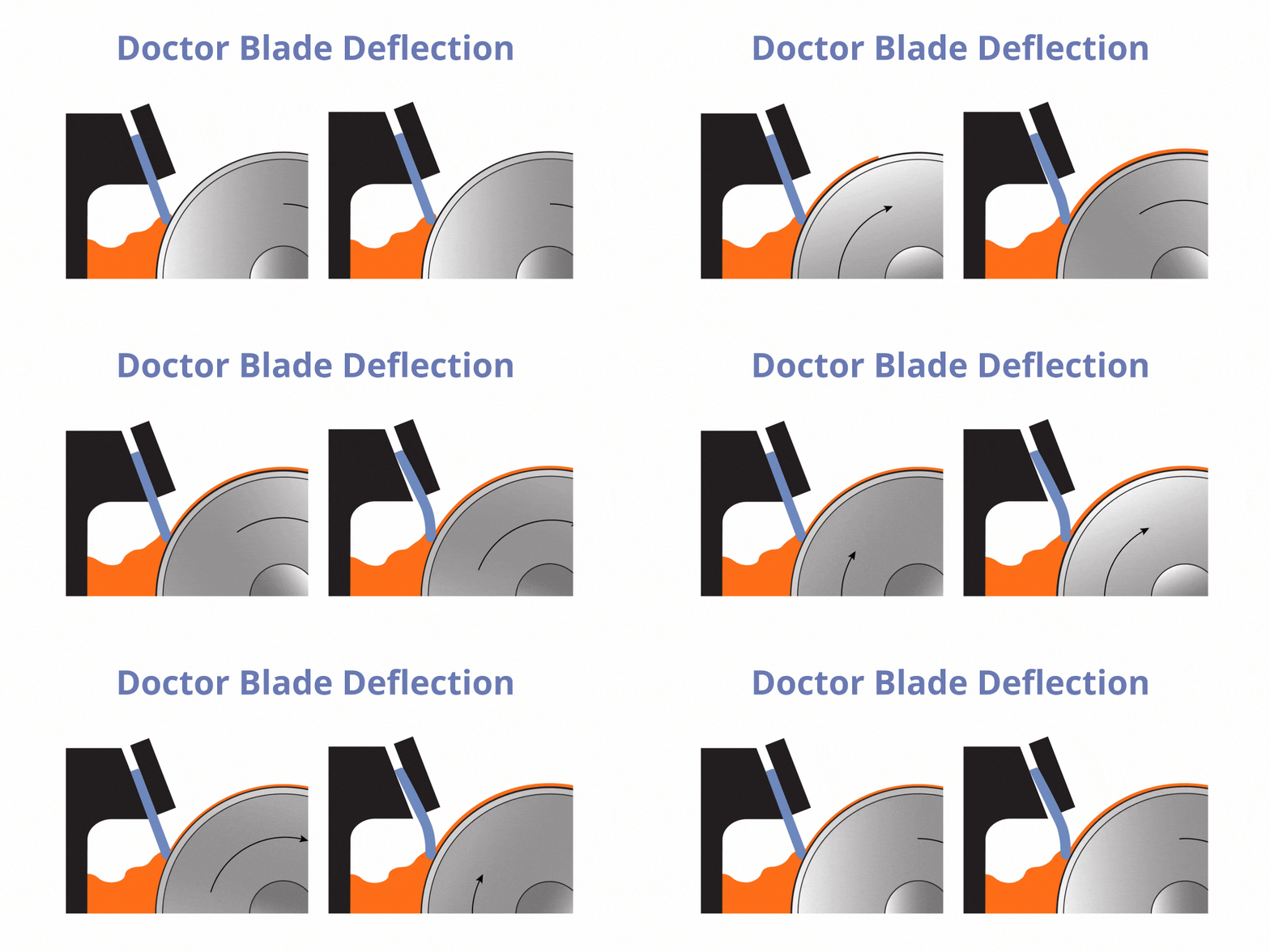 speeds (1,200–2,600 FPM), even slight deflection causes color variation, inconsistent ink laydown, and frequent press adjustments because the blade can no longer hold a stable, uniform metering edge over a long run. Deflection often develops gradually, which makes it hard to diagnose early, the blade looks fine while the print quality slowly drifts.
Common symptoms of doctor blade deflection are:
- Inconsistent ink laydown
- Increased blade wear
- Increased operator intervention
Why Does High-Speed Flexographic Printing Make Deflection Worse?
High-speed flexographic printing amplifies doctor blade deflection because mechanical stress at the blade-to-anilox interface increases sharply with press speed. Two factors drive this.
Increased mechanical forces. As speed rises, so does vibration, friction, and force on the doctor blade. A blade that performs well at moderate speeds can lose stability once those forces intensify, allowing the tip to flex under load. As anilox rotation speed increases, ink is fed into the blade nip at a higher rate, and the blade must resist rising hydrodynamic pressure to shear that ink cleanly. Combined with greater vibration and friction, this pressure is what drives blade tip deflection at high speeds.
Longer, more demanding runs. High-speed presses are built for efficiency and uptime, so blades must hold consistent performance over extended periods. Any loss of stiffness shows up quickly as print variation. At high press speeds, long-term blade stiffness matters far more than initial stiffness, a blade that starts stiff but softens mid-run will still produce deflection-driven defects.
How Do Modern Plastic Doctor Blades Reduce Deflection?
Modern plastic doctor blades reduce deflection by maintaining stiffness throughout the blade’s working life, not just at startup. Two engineering approaches deliver this.
Reinforced plastic doctor blades incorporate engineered fillers, such as glass fibers, into the polymer structure to resist flexing under load, maintain stiffness over long runs, and deliver consistent metering at high press speeds.
Laminated plastic doctor blades bond multiple layers of plastic around a high-strength core to improve both initial and long-term stiffness, reduce blade tip movement, and hold a stable metering edge across extended production.
Both designs allow consistent, steel-like metering without sacrificing anilox protection or operator safety, giving printers the rigidity of metal with the safety and roll-friendliness of polymer.
Why Is Deflection the Leading Hidden Cause of Print Instability at High Speeds?
Deflection is the leading hidden cause of print instability because, unlike blade wear, it leaves no obvious visual signal on the doctor blade itself. A blade can appear fully intact while still flexing enough to cause color inconsistency across the web, frequent operator adjustments, and reduced job-to-job repeatability.
Because operators tend to look for visible wear, deflection often goes undiagnosed while it quietly erodes quality and uptime. Addressing it proactively lets printers achieve stable metering without increasing blade pressure, protecting both print quality and anilox rolls at the same time.
What Type of Plastic Doctor Blade Best Controls Deflection?
The best blade for controlling deflection at high speeds is one engineered for sustained stiffness and modern plastic blades deliver that in two ways. Reinforced blades like TruPoint Edge offer maximum long-term stiffness, resisting tip movement across long, fast runs. Laminated blades like TruPoint PolyLam XL combine a high-strength core with an exceptionally smooth surface, making them ideal for applications where surface finish is critical, eliminating streaks and startup lines. For printers running narrow web or wide web at high FPM, both options convert a deflection-prone process into a repeatable one: tighter color consistency, fewer press stops, and better anilox protection without raising blade pressure.
Key Takeaways for High-Speed Flexographic Printers
- Doctor blade deflection is a hidden but critical cause of print inconsistency
- High press speeds amplify even minor blade instability
- Initial stiffness is not enough, long-term stiffness is what matters
- Reinforced and laminated plastic doctor blades are engineered to control deflection
- Reducing deflection improves color consistency, uptime, and repeatability
Ready to eliminate deflection from your high-speed runs? Trial TruPoint for free.
The most effective way to reduce doctor blade deflection without adding blade pressure is to switch to a blade engineered for sustained stiffness rather than compensating with force. Increasing pressure may mask deflection briefly, but it accelerates blade and anilox wear and introduces new metering inconsistencies. A better approach is selecting a reinforced blade such as TruPoint Edge or a laminated blade such as TruPoint PolyLam XL, whose constructions resist tip flexing across long, fast runs. Because the blade holds its own rigidity, you achieve stable metering at lower, gentler pressure settings. This protects the anilox roll, extends blade life, and improves repeatability between jobs. In practice, addressing deflection at the material level, choosing a blade built for long-term stiffness, solves the root cause, whereas raising pressure only treats the symptom and creates downstream problems.
Yes, modern plastic doctor blades can deliver steel-like metering stability while controlling deflection, thanks to advances in reinforced and laminated construction. Reinforced blades embed engineered fillers such as glass fibers into the polymer to resist flexing under load and maintain stiffness over long runs. Laminated blades bond multiple plastic layers around a high-strength core, improving both initial and long-term rigidity and reducing tip movement. Together these designs hold a stable metering edge at high press speeds without the drawbacks of metal. The advantage is that printers gain the rigidity needed to prevent deflection while keeping the anilox protection and operator safety that polymer blades are known for. For high-speed presses, a well-engineered plastic blade can match steel’s metering consistency without putting the anilox roll or operators at the same risk.
Doctor blade deflection and blade wear are different failure modes that are easy to confuse. Wear is the physical erosion of the blade edge over time, and it is usually visible on inspection, the edge rounds or thins. Deflection, by contrast, is the flexing or movement of the blade tip under load, and it can occur even when the blade looks completely intact. That is what makes deflection so deceptive: operators inspect for visible wear and find none, yet the press still produces color inconsistency and requires constant adjustment. Both problems hurt print quality, but they call for different solutions. Wear is addressed through blade material and edge selection, while deflection is controlled through blade stiffness, particularly long-term stiffness that holds up across extended, high-speed runs rather than softening partway through a job.
Doctor blade deflection is caused by mechanical forces at the blade-to-anilox interface that exceed the blade’s ability to stay rigid. At high press speeds, vibration, friction, and force on the blade all increase. As the anilox rotates faster, it feeds ink into the blade nip at a higher rate, and the blade must resist rising hydrodynamic pressure to shear that ink cleanly — pushing the tip to flex against the anilox roll. When the tip can no longer hold a stable position, ink metering becomes uneven. Deflection is made worse by blades that lose stiffness over the course of a run, since long, high-speed jobs demand sustained rigidity rather than just high initial stiffness. The result is color variation, inconsistent ink laydown, and frequent press adjustments. Because deflection develops gradually and leaves no visible sign on the blade itself, it often goes unnoticed while print quality slowly drifts.