
Yes. Next-generation polymer doctor blades can now meter like steel on high line screen anilox rolls, delivering longer blade life, improved safety, and reduced anilox scoring.
For decades, steel was the only option for printers running high-end graphics. Today, advanced polymers and precision tip engineering have changed that.
Why Was Steel the Standard for High Line Screens?
Steel doctor blades became the industry standard because they:
- Are thin and stiff
- Maintain a fine point of contact
- Deliver a clean wipe on high line screen anilox rolls
- Control ink film thickness with precision
In flexographic printing, metering performance depends on maintaining a small, consistent contact area with the anilox roll. Steel’s rigidity allows it to meter fine screens effectively, something traditional plastic blades could not achieve.
What Limited Traditional Plastic Doctor Blades?
Traditional plastic doctor blades offered advantages in safety and durability, but they had limitations in high-graphics applications.
Because earlier plastic materials were less stiff than steel, they had to be manufactured thicker to achieve rigidity. This created:
- Increased contact area with the anilox roll
- Inconsistent ink film thickness
- Tonal shifts and dot gain in fine screens
For this reason, traditional plastic blades were typically limited to:
- Lower-resolution graphics
- Applications with modest print requirements
They were not historically recommended for high line anilox rolls or process printing.
What Makes Next-Generation Polymer Doctor Blades Different?
Modern engineered polymers have significantly improved stiffness and wear characteristics. When paired with advanced edge geometry, they can now match or exceed steel’s metering performance.
TruPoint doctor blades are designed to:
- Achieve and maintain a fine contact area
- deliver precise metering on the full range on aniloxes, even higher line screens
- Wear slowly and evenly
- Provide consistent ink film thickness throughout the run
This means printers can now run high-end graphics, including process work and fine screens, without relying on steel.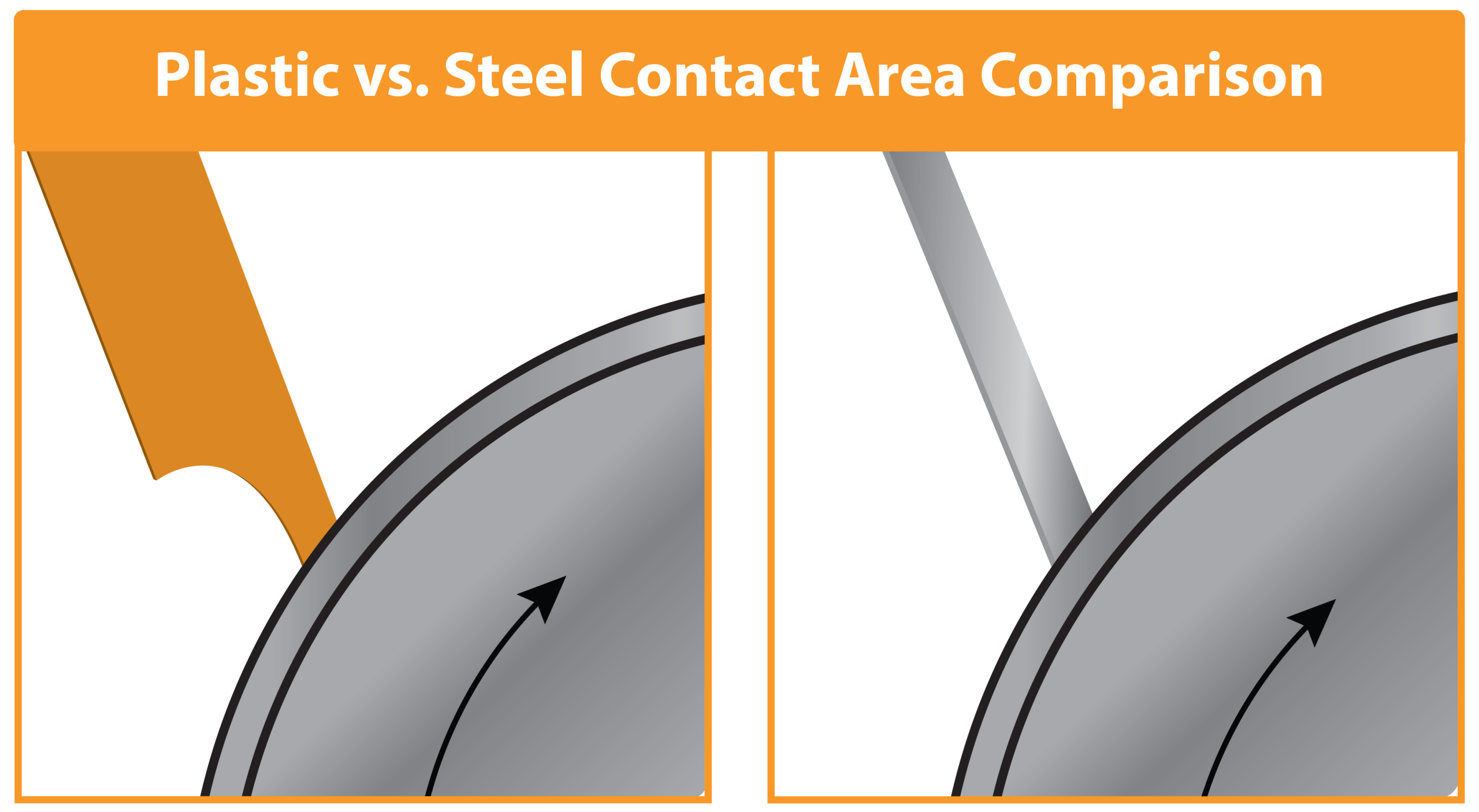
Doctor Blade Contact Area Comparison
Polymer blades today maintain a contact area that is a fraction of what traditional plastic blades provided, and more similar to that of steel.
Unlike traditional plastic, advanced polymer blades maintain a contact area equal to or smaller than most steel blades throughout their life. This stability reduces tonal variation and helps preserve consistent print quality from start to finish.
Can Polymer Doctor Blades Replace Steel in Flexo Printing?
In many applications, yes.
Next-generation polymer doctor blades are suitable for:
- Solids and line work
- Reverses
- Fine print
- High line screen process printing
They offer the metering precision of steel while maintaining the core advantages of polymer blades:
- Reduced anilox scoring
- Improved operator safety
- Longer blade life
- Reduced costs
Frequently Asked Questions
Do polymer blades change tonal value like traditional plastic?
Older plastic materials could cause tonal shifts due to contact area growth. Modern engineered polymers with precision tip designs maintain a controlled contact area, reducing dot gain and tonal inconsistency.
Are polymer doctor blades safer than steel?
Yes. Non-metallic blades reduce the risk of cuts during handling and installation, improving overall pressroom safety.
Will polymer blades damage anilox rolls?
Advanced polymer materials significantly reduce the risk of anilox scoring compared to steel blades.
The Bottom Line
Flexographic printers no longer have to choose between graphics performance and operational benefits.
With advanced polymers and engineered tip geometry, today’s high-performance polymer doctor blades meter like steel on the highest line screens while delivering longer life, improved safety, and protection for valuable anilox rolls.
If your application requires precision metering without the drawbacks of steel, next-generation polymer doctor blades are now a proven solution.